FALLSBURG – Telling young people about the Holocaust is a daunting task. How can you talk about the death of 12,000,000 people at the hands of a political regime in one of the most modern advanced nations of the western world in the middle of the 20th century? How can you avoid showing the frightening images of men and women, and especially children, as they are liberated from concentration camps?
How can you present the facts when there are thousands in the world who deny that the Holocaust ever happened? How does one make sense and convey the sense to young minds about such a horrific episode in human history?
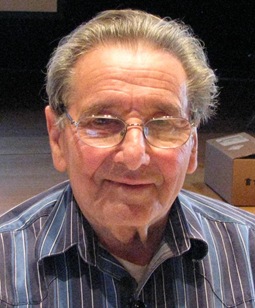
 Werner Reich is a man who has answered all these questions, and he offered his wisdom to two assemblies of 6th through 12th grade students at Fallsburg Junior/Senior High School on October 7. Ms. Dawn McCarthy, a long-term substitute teacher and parent of students in Fallsburg Central School District invited Mr. Reich to speak after hearing him at Tri Valley School District.
Mr. Reich was a small child in Germany when the Nazis assumed power and began passing laws to disenfranchise, to prevent people from working, owning property, and finally to killing them based on their religion, their political beliefs, their mental health, their sexual orientation, and 120 assorted categories. Reich introduced a word here that was probably new to the students—xenophobia or fear of anything foreign or different. Because of this state of fear and then the persecution it generated, Reich’s father moved the family to Yugoslavia. Safety there was short-lived. After being given to gentile families by his mother for protection in hiding, he was rounded up and began the years of World War Two in a series of jails and concentration camps in several European countries. From a second story window of the first incarceration, he saw his mother for the last time as she swept the street. He had barely reached his teen years at the time.
 In telling his personal story, Mr. Reich always came back to teaching the students the lesson of British historian Edmund Burke: “All that is necessary for evil to succeed is for good people to do nothing!” Winston Churchill spoke of the mass murder and called it “the crime with no name.” Later, historians began using the term “Holocaust” from the Greek words meaning whole burnt offering. Many people know that six million Jews perished; but there were six million Christians and others that were killed. Looking at the children, he soberly asked how we can even imagine the number 12,000,000. Then he showed on a United States map that if you lined up people, allowing a one foot, three inch space for each person, 12,000,000 would reach from New York to Los Angeles.
With a powerful slide show presentation, Mr. Reich keeps everyone’s attention. Except for some gasps, there is utter focus on his words and pictures. Here is a man not filled with hate or bitterness and not seething with revenge for the deaths of his parents and the loss of his childhood. On the contrary, he is filled with humanity, sharing his experiences with kids about the same age as he was when he endured the horrors of separation, torment, and hatred at the hands of inhumane people. Through it all, he has maintained his dignity. “The worst thing for me,” he said, “was not knowing if I would be alive the next day.”
Mr. Reich encourages young people to hear him and take in the lessons that he has learned. He sees a swastika as a symbol of hatred against humanity and not just against a particular group. He offers cards to all the students with the word JUST as an acronym for Judge the situation, Understand the problem, Solve the problem, and Take action. He encourages them to not be indifferent when they see suffering, bullying, and other unjust acts. As George Bernard Shaw said, “Indifference is the essence of Inhumanity.”
As he went through his history of personal persecution, he put it into a context that all kids could relate to. There are four groups in oppression: the Victim, the Bully and the Gang, the Just, and the Bystanders. He made sure to describe each group during his story of the Holocaust. The Bystanders were the good people who do nothing. The common thread for the Just people, when asked why they risked their lives to save the lives of others, was a simple response, “Because it was the right thing to do.” These people did not wait for others. Speaking to each and every one in the audience, Mr. Reich looked out and said, “Be the first to act. JUST people are just people.”
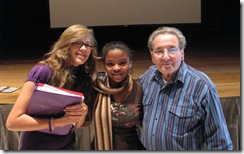
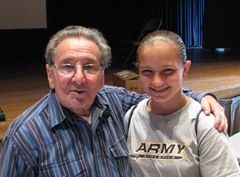
After the one hour presentation, several hundred young people and their teachers stood as one and applauded Werner Reich. They were moved by his words. They learned about tolerance, about being a human being, and about doing the right thing in the face of someone taking advantage of another human being. Many young people came up to him and thanked him. He was very sweet with them all. In that moment a young German boy was meeting his modern American contemporaries. This wise old man was back in that gentle safe place of an innocent childhood.
Click any service in this box to share this post with your friends!
Related








 The Catskill Chronicle
A Survivor’s Story in Fallsburg
October 11, 2009 by The Catskill Chronicle
FALLSBURG – Telling young people about the Holocaust is a daunting task. How can you talk about the death of 12,000,000 people at the hands of a political regime in one of the most modern advanced nations of the western world in the middle of the 20th century? How can you avoid showing the frightening images of men and women, and especially children, as they are liberated from concentration camps?
How can you present the facts when there are thousands in the world who deny that the Holocaust ever happened? How does one make sense and convey the sense to young minds about such a horrific episode in human history?
Mr. Reich was a small child in Germany when the Nazis assumed power and began passing laws to disenfranchise, to prevent people from working, owning property, and finally to killing them based on their religion, their political beliefs, their mental health, their sexual orientation, and 120 assorted categories. Reich introduced a word here that was probably new to the students—xenophobia or fear of anything foreign or different. Because of this state of fear and then the persecution it generated, Reich’s father moved the family to Yugoslavia. Safety there was short-lived. After being given to gentile families by his mother for protection in hiding, he was rounded up and began the years of World War Two in a series of jails and concentration camps in several European countries. From a second story window of the first incarceration, he saw his mother for the last time as she swept the street. He had barely reached his teen years at the time.
With a powerful slide show presentation, Mr. Reich keeps everyone’s attention. Except for some gasps, there is utter focus on his words and pictures. Here is a man not filled with hate or bitterness and not seething with revenge for the deaths of his parents and the loss of his childhood. On the contrary, he is filled with humanity, sharing his experiences with kids about the same age as he was when he endured the horrors of separation, torment, and hatred at the hands of inhumane people. Through it all, he has maintained his dignity. “The worst thing for me,” he said, “was not knowing if I would be alive the next day.”
Mr. Reich encourages young people to hear him and take in the lessons that he has learned. He sees a swastika as a symbol of hatred against humanity and not just against a particular group. He offers cards to all the students with the word JUST as an acronym for Judge the situation, Understand the problem, Solve the problem, and Take action. He encourages them to not be indifferent when they see suffering, bullying, and other unjust acts. As George Bernard Shaw said, “Indifference is the essence of Inhumanity.”
As he went through his history of personal persecution, he put it into a context that all kids could relate to. There are four groups in oppression: the Victim, the Bully and the Gang, the Just, and the Bystanders. He made sure to describe each group during his story of the Holocaust. The Bystanders were the good people who do nothing. The common thread for the Just people, when asked why they risked their lives to save the lives of others, was a simple response, “Because it was the right thing to do.” These people did not wait for others. Speaking to each and every one in the audience, Mr. Reich looked out and said, “Be the first to act. JUST people are just people.”
After the one hour presentation, several hundred young people and their teachers stood as one and applauded Werner Reich. They were moved by his words. They learned about tolerance, about being a human being, and about doing the right thing in the face of someone taking advantage of another human being. Many young people came up to him and thanked him. He was very sweet with them all. In that moment a young German boy was meeting his modern American contemporaries. This wise old man was back in that gentle safe place of an innocent childhood.
Click any service in this box to share this post with your friends!
Related
Posted in Comments | Leave a Comment
Comments RSS