Story and photos by Carol Montana
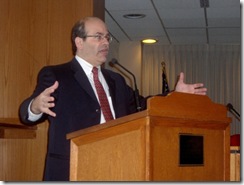 Once a year the Senior Legislative Action Committee gets a very special visitor.
This year, Director of the New York State Office for the Aging (NYSOFA) Michael Burgess started his visit with an announcement about a new program. “I’m coming with good news about giving you money for a project that our office is funding – Community Empowerment with Cooperative Extension (CCE) of Sullivan County.”
Burgess explained that the aim of his office is to enable people to “remain living independently in the community.”
Towards that goal, Bonnie Lewis, Caregiver Resource Center Coordinator for Cornell Cooperative Extension of Sullivan County has been tasked with having “the TRIAD group … bring together people who are active to look at doing an assessment on how you can help people to remain living in the community.” In fact, a forum was held last month seeking input on that very subject. (See the Chronicle story on “Empowering Sullivan County to Build Aging-Friendly Communities.” )
TRIAD is a partnership of senior citizens, senior providers and law enforcement dedicated to reducing victimization of the elderly through assessing the needs and concerns of senior citizens and educating senior to the dangers of scams and abuse.
Burgess said that Sullivan County is a “great community to pick for this kind of project because you do have a lot of active people here.” And he maintains that it’s important for older people to be involved in the process.
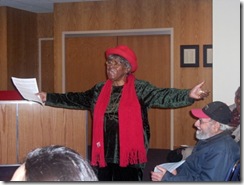 The best way to achieve success in a program of this kind is by utilizing volunteers, Burgess said. “We believe that neighbor-to-neighbor still makes a difference. … We get into the habit of thinking that we can’t do anything unless it’s directed by Albany , but that’s not true.”
As he gave examples of volunteerism, Burgess announced a new initiative. “Here’s an example of something that we’re working on and I hope it’s something that you will consider doing. We call it the Health Care Navigator. We think that using volunteers to follow people when they come home from the hospital can help us to reduce the number of people who get readmitted to the hospital. There’s about 18 percent readmitted after 60 days. Some of this is because we haven’t been making people have the right kind of support when they get home – making sure they got their medicine, transportation to the doctor.”
The initiative will involve training. “It’s really like having an advocate or care-transition person to assist them when they come home from the hospital,” Burgess explained, “especially if they didn’t have a caregiver or family member.”
Some of the tasks the volunteer would be asked to assist with, Burgess said, are grocery shopping, reading mail, contacting the individual to see that they’re doing okay. “We think this is a way to help people live in the community … using neighbors and friends.” And then, referring to the current health care reform debate, he continued, “ … that’s one way to save money on health care is to stop people from having to go back into the hospital.”
Not all the news was good, of course. Burgess talked about the budget problems in Albany, and jokingly mentioned that, “Thank God Washington doesn’t have to balance its budget because we are getting a lot of money into the state for some things like the nutrition program got an increase from the stimulus package – $6 million, a little bit more for older workers on the Title 5 program.”
He went on to explain that Governor Paterson has asked for a five percent cut across the board in all the NYSOFA programs. “We got more from the state budget when it was passed earlier this year, so we’re going to lose a little bit of what we gained,” Burgess said.
He also cautioned the audience about the national health care debate. “It’s important to get all the facts, you hear a lot of negative things, but there are a lot of good things about it, we’re hoping that the Medicare donut hole under Part D will be partly filled in … one provision provides for some with help with long-term care. We don’t know what will be in the final version …”
Burgess clarified that the rumor on so-called death panels for seniors is not true. “It’s unfortunate that it got twisted around that way because it’s simply giving doctors reimbursement for providing information about doing a health care proxy, about doing living will, explaining that to people … actually giving you a greater choice about making decisions.”
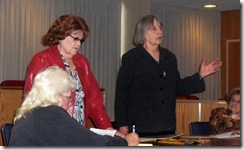 At that point in the meeting, SLAC President Priscilla Bassett made it clear that, “Seniors cannot afford any cuts, period. We’re saying across the board, no cuts.”
Burgess promised he would take that to the governor’s office. “I don’t make those budget decisions, unfortunately, I recommend what we think should happen … Last year we were successful in preventing a lot of the cuts to senior programs … it’s getting more and more difficult to do that every year, the deficit for the state if $3.2 billion in this year’s budget, that’s a pretty big number, and another $3-4 billion for next year.”
Roz Sharoff, VP of SLAC and President of the Monticello Seniors shared another concern. “Some of these programs offer the seniors the only time they get to see another human being,” she said. “People are strapped to their homes, they can’t get out for one reason or another, they get a worker come in or they get somebody delivering a meal, it’s the only time they have to see someone, to socialize with someone, to say what’s the weather outside. That’s such an important factor.”
For Burgess, Sharoff’s comment just solidified his belief that local resources are the best way to accomplish anything. “Regardless of what government does, it’s still at the local level — neighbors taking care of neighbors. Your generation did all of this – look at what you did during WWII, you know how to do this, you know how to make sure how people are safe and protected.”
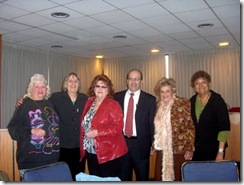 Burgess calls seniors “social capital.” In Sullivan County, he said, the seniors are a resource. “If you can do this with all the connections you have in this community, mobilize that with the faith community and other organizations, I think that you can be a real good model, showing how you can help take care of each other and do even more because through these difficult time we’re going to have to see that happen. But I know you can do it. You’re a good group of people and this is one of the most active groups that I see every year when I go around the state. I always look forward to coming here.”
Click any service in this box to share this post with your friends!
Related









 The Catskill Chronicle
Burgess Brings Good News to SLAC
November 5, 2009 by The Catskill Chronicle
Story and photos by Carol Montana
This year, Director of the New York State Office for the Aging (NYSOFA) Michael Burgess started his visit with an announcement about a new program. “I’m coming with good news about giving you money for a project that our office is funding – Community Empowerment with Cooperative Extension (CCE) of Sullivan County.”
Burgess explained that the aim of his office is to enable people to “remain living independently in the community.”
Towards that goal, Bonnie Lewis, Caregiver Resource Center Coordinator for Cornell Cooperative Extension of Sullivan County has been tasked with having “the TRIAD group … bring together people who are active to look at doing an assessment on how you can help people to remain living in the community.” In fact, a forum was held last month seeking input on that very subject. (See the Chronicle story on “Empowering Sullivan County to Build Aging-Friendly Communities.” )
TRIAD is a partnership of senior citizens, senior providers and law enforcement dedicated to reducing victimization of the elderly through assessing the needs and concerns of senior citizens and educating senior to the dangers of scams and abuse.
Burgess said that Sullivan County is a “great community to pick for this kind of project because you do have a lot of active people here.” And he maintains that it’s important for older people to be involved in the process.
As he gave examples of volunteerism, Burgess announced a new initiative. “Here’s an example of something that we’re working on and I hope it’s something that you will consider doing. We call it the Health Care Navigator. We think that using volunteers to follow people when they come home from the hospital can help us to reduce the number of people who get readmitted to the hospital. There’s about 18 percent readmitted after 60 days. Some of this is because we haven’t been making people have the right kind of support when they get home – making sure they got their medicine, transportation to the doctor.”
The initiative will involve training. “It’s really like having an advocate or care-transition person to assist them when they come home from the hospital,” Burgess explained, “especially if they didn’t have a caregiver or family member.”
Some of the tasks the volunteer would be asked to assist with, Burgess said, are grocery shopping, reading mail, contacting the individual to see that they’re doing okay. “We think this is a way to help people live in the community … using neighbors and friends.” And then, referring to the current health care reform debate, he continued, “ … that’s one way to save money on health care is to stop people from having to go back into the hospital.”
Not all the news was good, of course. Burgess talked about the budget problems in Albany, and jokingly mentioned that, “Thank God Washington doesn’t have to balance its budget because we are getting a lot of money into the state for some things like the nutrition program got an increase from the stimulus package – $6 million, a little bit more for older workers on the Title 5 program.”
He went on to explain that Governor Paterson has asked for a five percent cut across the board in all the NYSOFA programs. “We got more from the state budget when it was passed earlier this year, so we’re going to lose a little bit of what we gained,” Burgess said.
He also cautioned the audience about the national health care debate. “It’s important to get all the facts, you hear a lot of negative things, but there are a lot of good things about it, we’re hoping that the Medicare donut hole under Part D will be partly filled in … one provision provides for some with help with long-term care. We don’t know what will be in the final version …”
Burgess clarified that the rumor on so-called death panels for seniors is not true. “It’s unfortunate that it got twisted around that way because it’s simply giving doctors reimbursement for providing information about doing a health care proxy, about doing living will, explaining that to people … actually giving you a greater choice about making decisions.”
Burgess promised he would take that to the governor’s office. “I don’t make those budget decisions, unfortunately, I recommend what we think should happen … Last year we were successful in preventing a lot of the cuts to senior programs … it’s getting more and more difficult to do that every year, the deficit for the state if $3.2 billion in this year’s budget, that’s a pretty big number, and another $3-4 billion for next year.”
Roz Sharoff, VP of SLAC and President of the Monticello Seniors shared another concern. “Some of these programs offer the seniors the only time they get to see another human being,” she said. “People are strapped to their homes, they can’t get out for one reason or another, they get a worker come in or they get somebody delivering a meal, it’s the only time they have to see someone, to socialize with someone, to say what’s the weather outside. That’s such an important factor.”
For Burgess, Sharoff’s comment just solidified his belief that local resources are the best way to accomplish anything. “Regardless of what government does, it’s still at the local level — neighbors taking care of neighbors. Your generation did all of this – look at what you did during WWII, you know how to do this, you know how to make sure how people are safe and protected.”
Click any service in this box to share this post with your friends!
Related
Posted in Comments | Leave a Comment
Comments RSS