SULLIVAN COUNTY, NY (January 3, 2014) – NYS Governor Andrew M. Cuomo has provided these winter safety tips for our readers.
What is hypothermia?
 When exposed to cold temperatures, your body begins to lose heat faster than it can be produced. The result is hypothermia, or abnormally low body temperature.
Body temperature that is too low affects the brain, making the victim unable to think clearly or move well. This makes hypothermia particularly dangerous because a person may not know it is happening and won’t be able to do anything about it.
Hypothermia occurs most commonly at very cold environmental temperatures, but can occur even at cool temperatures (above 40°F) if a person becomes chilled from rain, sweat, or submersion in cold water.
Who is most at risk for hypothermia?
Victims of hypothermia are most often:
Elderly people with inadequate food, clothing, or heating
Babies sleeping in cold bedrooms
Children left unattended
Adults under the influence of alcohol
Disabled individuals  People who remain outdoors for long periods – the homeless, hikers, hunters, etc.
What are the warning signs for hypothermia?
Adults:
Shivering/exhaustion
Confusion/fumbling hands
Memory loss/slurred speech
Drowsiness
Infants:
Bright red, cold skin
Very low energy
What should I do if I see someone with warning signs of hypothermia?
If you notice signs of hypothermia, take the person’s temperature. If it is below 95°F (35°C), the situation is an emergency—get medical attention immediately.
If medical care is not available, begin warming the person, as follows:
Get the victim into a warm room or shelter.
If the victim has on any wet clothing, remove it.
Warm the center of the body first—chest, neck, head, and groin—using an electric blanket, if available. Or use skin-to-skin contact under loose, dry layers of blankets, clothing, towels, or sheets.
Warm beverages can help increase the body temperature, but do NOT give alcoholic beverages. Do not try to give beverages to an unconscious person.
After body temperature has increased, keep the person dry and wrapped in a warm blanket, including the head and neck.
Get medical attention as soon as possible.
A person with severe hypothermia may be unconscious and may not seem to have a pulse or to be breathing. In this case, handle the victim gently, and get emergency assistance immediately.
Even if the victim appears dead, CPR should be provided. CPR should continue while the victim is being warmed, until the victim responds or medical aid becomes available. In some cases, hypothermia victims who appear to be dead can be successfully resuscitated.
What is frostbite?
Frostbite is an injury to the body that is caused by freezing. Frostbite causes a loss of feeling and color in affected areas. It most often affects the nose, ears, cheeks, chin, fingers, or toes. Frostbite can permanently damage the body, and severe cases can lead to amputation.
 What are the warning signs of frostbite?
At the first signs of redness or pain in any skin area, get out of the cold or protect any exposed skin—frostbite may be beginning. Any of the following signs may indicate frostbite:
A white or grayish-yellow skin area
Skin that feels unusually firm or waxy
Numbness
Note: A victim is often unaware of frostbite until someone else points it out because the frozen tissues are numb.
What should I do if I see someone with warning signs of frostbite?
If you detect symptoms of frostbite, seek medical care. Because frostbite and hypothermia both result from exposure, first determine whether the victim also shows signs of hypothermia, as described previously. Hypothermia is a more serious medical condition and requires emergency medical assistance.
If (1) there is frostbite but no sign of hypothermia and (2) immediate medical care is not available, proceed as follows:
Get into a warm room as soon as possible.
Unless absolutely necessary, do not walk on frostbitten feet or toes—this increases the damage.
Immerse the affected area in warm—not hot—water (the temperature should be comfortable to the touch for unaffected parts of the body).
Or, warm the affected area using body heat. For example, the heat of an armpit can be used to warm frostbitten fingers.
Do not rub the frostbitten area with snow or massage it at all. This can cause more damage.
Don’t use a heating pad, heat lamp, or the heat of a stove, fireplace, or radiator for warming.
Affected areas are numb and can be easily burned.
Protect yourself when it is extremely cold
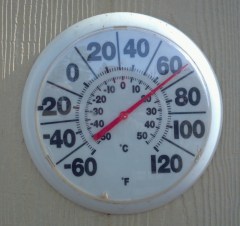 The World Health Organization recommends keeping indoor temperatures between 64 and 75 degrees Fahrenheit for healthy people. The minimum temperature should be kept above 68 degrees Fahrenheit to protect the very young, the elderly, or people with health problems.
Watch out for signs of hypothermia. Early signs of hypothermia in adults include shivering, confusion, memory loss, drowsiness, exhaustion and slurred speech. Infants who are suffering from hypothermia may appear to have very low energy and bright red, cold skin.
When outside, take extra precautions to reduce the risk of hypothermia and frostbite. Dress appropriately; ensure the outer layer of clothing is tightly woven to guard against loss of body heat. When outdoors, don’t ignore the warnings signs. Shivering is an important first sign that the body is losing heat and a signal to quickly return indoors.
For those with cardiac problems or high blood pressure, follow your doctor’s orders about shoveling or performing any strenuous exercise outside. Healthy adults should always dress appropriately and work slowly when doing heavy outdoor chores.
 Stay safe while heating your home
Take precautions to avoid exposure to dangerous levels of carbon monoxide. Carbon monoxide (CO) is a potentially deadly gas. It is colorless, odorless, tasteless and non-irritating. It is produced by burning fuels such as wood, oil, natural gas, kerosene, coal and gasoline.
Symptoms of carbon monoxide poisoning are similar to the flu but do not include a fever. At lower levels of exposure, a person may experience a headache, fatigue, nausea, vomiting, dizziness, and shortness of breath. Exposure to very high levels of carbon monoxide can result in loss of consciousness and even death.
For more information see:
http://www.health.ny.gov/environmental/emergency/weather/carbon_monoxide/("http://www.health.ny.gov/environmental/emergency/weather/carbon_monoxide/")
 If you use a fireplace, wood stove, or portable kerosene heater to stay warm, be sure there is adequate ventilation to the outside. Without enough fresh air, carbon monoxide fumes can build up in your home. Never use a natural gas or propane stove/oven to heat your home. If you are using a kerosene heater, use 1-K grade kerosene only. Never substitute with fuel oil, diesel, gasoline or yellow (regular) kerosene.
Open a window to provide ventilation when a portable kerosene heater is in use to reduce carbon monoxide fumes inside the home. If you plan to cook on a barbeque grill or camp stove, remember these also produce carbon monoxide and are for outdoor use only. Wood stoves, space heaters, electric heaters, kerosene heaters and pellet stoves can be dangerous unless proper safety precautions are followed. Learn more at:  http://www.health.ny.gov/environmental/indoors/heaters("http://www.health.ny.gov/environmental/indoors/heaters").
Never try to thaw a pipe with an open flame or torch and be aware of the potential for electric shock in and around standing water. To keep water pipes from freezing in the home let faucets drip a little to avoid freezing, open cabinet doors to allow more heat to get to un-insulated pipes under a sink or appliance near an outer wall. Keep the heat on and set no lower than 55 degrees.
Generator Safety
Be sure to follow the manufacturer’s instructions.
Never run a generator in your home or indoor spaces,such as garages,  basements, porches, crawlspaces or sheds, or in partly enclosed spaces such as carports or breezeways. Generators should only be operated outside, far away from (25 feet or more if possible) and downwind of buildings. Carbon monoxide in the generator’s fumes can build up and cause carbon monoxide poisoning, which can lead to death.
Do not exceed the rated capacity of your generator. Overloading your generator can damage it and any appliances connected to it. Fire may result.
Fuel spilled on a hot generator can cause an explosion. If your generator has a detachable fuel tank, remove it before refilling. If this is not possible, shut off the generator and let it cool before refilling.
Fire Safety
When adding fuel to a space heater, or wood to a wood stove or fireplace, wear non-flammable gloves.
Never add fuel to a space heater when it is hot. The fuel can ignite, burning you and your home.
Keep the heater away from objects that can burn, such as furniture, rugs or curtains.
If you have a fire extinguisher, keep it nearby.
Be careful with candles–never leave them burning if you leave the room.
Keep children away from space heaters, fireplaces and wood stoves to avoid accidental burns.
Check on your family or neighbors and find out how they’re doing. Make sure they know what to do–and what not to do–to protect their health.
More information and precautions about cold weather can be found at:
http://www.health.ny.gov/environmental/emergency/weather/cold/cold_weather_tips.htm("http://www.health.ny.gov/environmental/emergency/weather/cold/cold_weather_tips.htm") .
 high winds across New York State. A state of emergency mobilizes resources to local governments that otherwise are restricted to state use only and allows the Governor to suspend laws and regulations that would impede rapid response.
  midnight tonight with an anticipated reopening at 5a.m. dependent upon weather conditions: Interstate 84 from the Pennsylvania state line to the Connecticut state line; Interstate 87 from exit 24 in Albany to the New York City border and the Long Island Expressway in Nassau and Suffolk Counties. The ban will be enforced with a combination of entrance closures and police enforcement. Violators of the ban will be subject to a Class B misdemeanor.
 winds and white out conditions may result in intermittent bridge or ramp closures. Certain vehicles, including motorcycles, tractor trailers, step vans, mini buses, trucks with open backs, cars pulling trailers, motorhomes, and vehicles carrying plate glass, may be temporarily barred from using crossings due to high winds and wet roadways.
  Affected Jurisdiction: Sullivan County
  * Wind Chills…Will Drop To Between Minus 10 To Minus 25 Degrees Late Tonight And Friday.









 The Catskill Chronicle
SEQRA Educational Conference Hosted by SC Partnership
Posted in Comments on January 4, 2014| Leave a Comment »
BRIDGEVILLE, NY (January 2, 2014) – The Sullivan County Partnership for Economic Development is hosting a complimentary State Environmental Quality Review Act (SEQRA) Educational Conference on Wednesday, January 15 at Bernie’s Holiday Restaurant, in Rock Hill, NY.
The event, which will provide continuing education credits to municipal Planning Board members and professional development hours to engineers, will highlight and explain the basics and recent changes.
Attendees will leave with a reference guide to review the material covered during the conference.
Speakers include: Travis O’Dell, Upper Delaware Council, Narrowsburg; Jack Nasca, division director, and Robert Ewing, environmental analyst-2, both of the NYS Department of Environmental Conservation, Albany; Mike Merriman, project manager/permitting specialist, Ecological Analysis, LLC, Middletown; Larry Wolinsky, environmental/land use attorney, managing partner, Jacobowitz & Gubits, LLP, Walden and Jacob Billig, environmental/land use attorney, managing partner, Billig, Loughlin & Baer, LLP, Monticello.
“Major residential, commercial, and industrial developments in New York are subject to myriad federal and state laws designed to protect the environment,” Marc Baez, president/CEO of the Sullivan County Partnership, said. “As the review process often changes, we in Sullivan County need to ensure that our development leaders understand how SEQRA affects their communities, their businesses, or their clients.”
The conference is free and suitable for those on municipal planning boards, engineers, attorneys, developers, and business people. It will take place from 5:00 p.m.-9:30 p.m., with a break for dinner from 5:30 p.m.-6 p.m. at Bernie’s Holiday Restaurant, 277 Rock Hill Drive, Rock Hill, NY.
To register for the seminar, contact Michele Klugman Resnick at 845.794.1110 or michele@scpartnership.com.
Click any service in this box to share this post with your friends!
Read Full Post »