By Janet Waterston
 Almost 45 years since sixth grade, I can’t say I remember much about that pre-junior high school year. It was the year following John F. Kennedy’s death and several years before the first walk on the moon. Girls were still required to wear skirts or dresses to school. My wardrobe consisted almost entirely of tartan plaid kilts that I wore with crewneck sweaters and matching kneesocks. I played French horn in the high school summer band and felt pretty grown up: a twelve year old, a mouthful of silvery braces, mingling with all those teenagers.
I looked at my old report card to see if there would be some indication of who I was that year or why Mr. Vogt stands out in my mind. His comments were bland, “Janet does well in all areas.” “Janet is a good, conscientious, interested student.”
I have no idea what I studied in sixth grade or what Mr. Vogt’s 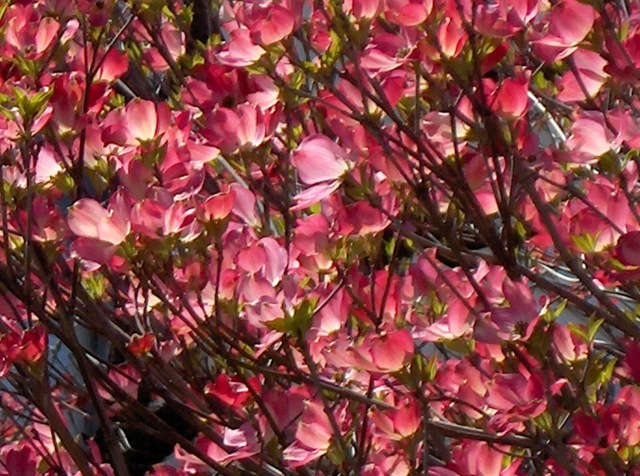 teaching style was. What I do know, is that Mr. Vogt planted a seed that year, and 45 years later, I want to tell him the seed took hold and blossomed.
Besides my report card that my father dutifully saved along with all my other report cards and those of my siblings, I held onto one project from sixth grade. It is comprised of four booklets, each devoted to nature. There is one of pictures cut from magazines; another of famous and not so famous poems I selected to illustrate my perception of the forces of nature; a third of pressed leaves and flowers; and the one of most interest to me, my journal of observations. Based on my childish (and fairly corny) scribblings, I can imagine we were required to sit outside on several days over a two or three week period, at different times of the day, and capture in words what we saw. On April 27, 1965, I wrote, “The grass, after a day of rain, is finally turning green. It smells fragrantly, hinting of flowers that will soon bloom. Most trees are still bare but our Dogwood is already popping with buds. The pretty, yellow Forsythias have bloomed, adding color to the awakening earth.”
 Today, at my house in rural Sullivan County, I lie in the hammock under the enormous pine and maple trees and catch the sun peeking between the leaves stirred by a late afternoon breeze. Two robins chase each other into the apple tree and red-winged blackbirds call to each other in their incessant and insisting tones.
Yesterday, while I weeded the area around our beautiful hollyhocks, in bloom for the first time since I planted them last year, a frog jumped out. We’re both surprised by each other’s presence.
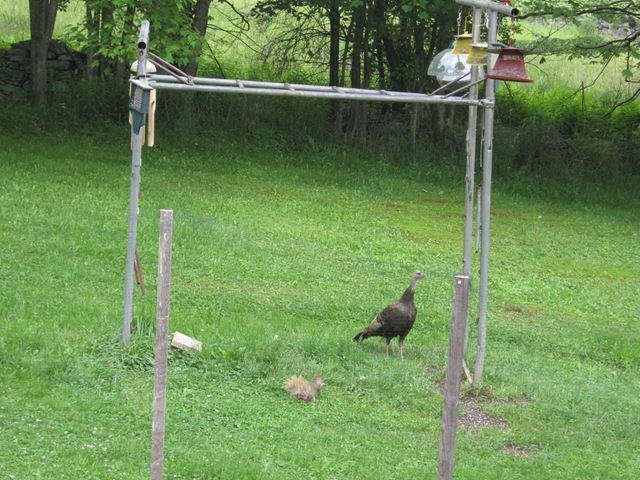
 Each day, I refill the tray and hanging bird feeders and watch as chickadees, nuthatches, cardinals, downy and hairy woodpeckers, blue jays, mourning doves, chipmunks and squirrels help themselves to a meal. A lone wild turkey has also discovered the bird seed and shows up each afternoon for a nibble. A warbler has taken up residence in one of the birdhouses we had affixed to what we lovingly refer to as the “tree sculpture.”
 Would I have noticed this vibrant life around me if it hadn’t been for Mr. Vogt? Would I, this city girl, have cared about the variety of ferns on our property or which leaves turn color first each fall? Would I have hung feeders on the abandoned monkey bars and learned to identify a rose-breasted grosbeak and a yellow-bellied woodpecker? Would I race the birds to eat the first raspberries on the wild bushes that seem to spring up from nowhere on our property? Maybe, in time, I would have discovered the beauty of the world around me, but just in case, I want to send out my gratitude to Mr. Vogt for asking his sixth graders to see more of their world than just textbooks and blackboards.







 The Catskill Chronicle
I remember Mr. Vogt and vaguely remember the assignment. Mr Vogt made an impression on me as well. He enjoyed teaching and had an appreciation for the students in his class. His friendship with other teachers in the school (Mr and Mrs Barkan) taught me that teachers actually had a life outside of school. Until that time, I thought they were stored someplace in the school until the next day.
Both Mr Vogt and Mr Barkan both had an appreciation for Broadway musicals. Both classes would get together on Friday afternoons for “Music Appreciation” and listen to the score from a musical. They even took us on a trip to Manhattan to see Camelot. At the time Robert Goulet still played Sir Lancelot, but Richard Burton no longer played King Arthur.
I’ve tried to find them as well.