By Janet Waterston
He whom we love and lose,
Is no longer where he was before,
He is now wherever we are.
My friend was sharing her heartache about poor treatment by her boyfriend when I found myself offering my mother’s wisdom. My friend replied, “I wish I’d known your mother. She always knew what to say; she sounds so smart and wonderful.” I almost responded, “You do know her,” meaning my mother is inside me, but that seemed too strange a response. Then I found the above quote from St. John Chyrsostom, a fourth century archbishop, and realized that yes, my mother is wherever I am.
 My mother, Mattie, died on September 13, 1976. My family and I have lived another lifetime without her, and yet, she seems ever-present. For years, on Mother’s Day, my sister Jude and I would make a point of being with our father. The three of us would share memories of my mother. It seemed so fitting for, as much as Jude and I loved her as our mother, my father never lost his connection to his life partner. “I followed her lead,” he has often commented, whether it was about parenting or exploring the world. “I had no interest in traveling,” my father said, “but after that first trip for which we saved for years, I saw why your mother thought it was important to expose ourselves to different cultures and experiences. We never skipped a yearly trip after that, right up until the last year of your mother’s life.”
 That last trip was to visit me while I studied and worked on a kibbutz in Israel. My parents came to the kibbutz and met my friends. My mother, who thought of herself as shy, connected on a personal note with so many of the people I cared about. With Ira and Adina, a psychiatrist married to an educator in child development, my mother referred to my letters home and thanked them for encouraging me to pursue my interest working with children with special needs. Nina, my traveling companion who they knew from the States, they insisted join us for dinner in town. They visited Ofra and Clara, two friends on another kibbutz. I’d met them years before when my mother discovered an extraordinary opportunity for teenagers to spend a summer working on a kibbutz and sightseeing in Israel
We didn’t know during that visit that my mother’s cancer had metastasized, so when she died just months later, I received this note acknowledging my 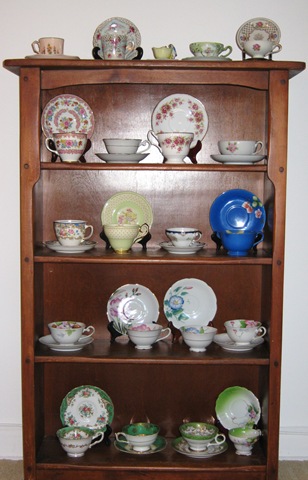 mother’s ability to touch lives: “My dear Janet, We are cut to the quick to read of your mother’s death in the obituary column. We can’t begin to imagine the extent of the pain and sorrow that the death of such a wholesome, generous, delightful individual has caused to her surroundings. Love, Adina & Ira.”
When I was in college, I was diagnosed with TMJ, a condition that resulted in my jaw locking. My mother researched dentists and took me to a specialist who described an arduous process of several progressive steps, all of which sounded grueling, time-consuming and didn’t promise relief of the problem. We left his office feeling dejected when my mother had an inspiration to lift our spirits. We took the subway to the Plaza Hotel where I experienced my first afternoon tea. Since then, “tea” has come to define me. Across one wall of my dining room is a shelf of teapots and every morning, I pick a different teacup in which to enjoy jasmine silver needle tea or Earl Grey. I have introduced friends and clients to the oasis of calm and conversation that afternoon tea offers from the stresses of the world.
 My family moved from Deer Park, Long Island to Bayside, Queens when I was about to begin eighth grade. My mother took me to my new junior high school to meet with the band instructor and arrange for me to rent a French horn. The instrument produced was a piece of junk, and I reacted like a typical, bratty preteen: it was all my parents’ fault for taking me away from the fabulous music program I’d had in my old school.
I think that was the first and only time I saw my mother cry other than at a sad movie. Afterwards, she arranged to privately rent me an instrument that met my snotty standards. She also found a special music program at the University of Vermont that I participated in the following summer. Then she and my father took me to Giardinelli’s, a famous music store in Manhattan, where they bought me my own French horn of the type recommended by the professional musician with whom I’d studied in Vermont. And that year, Mom also found Harry Berv, one of the Berv brothers, who all played French horn under the baton (and temper) of Toscannini, to give me private lessons. When it came time to go away to college – and I only wanted to go to the State University at Albany – my shy, retiring mother called the head of the music department and secured me “early admission” based on my French horn playing even though State schools really didn’t offer early acceptance.
Other memories abound. At the start of each school year, my parents drove me up to college, and Mom always insisted on 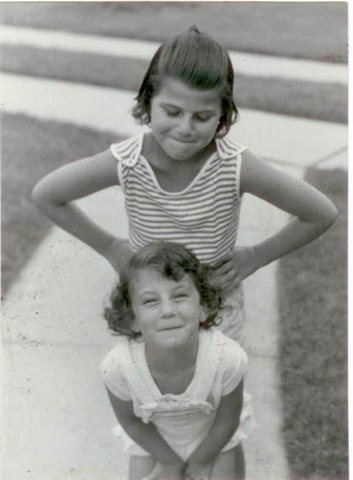 making my bed that first day of the term. A small touch, but one that left a lasting impression on me of a mother’s love through little acts. When I came home on breaks, we would attend the opera, getting student tickets since she, too, was in college at the same time.
Now I refer to her wisdom in my work as an executive coach. Regarding consistency, I remember a time when my sister was punished, banishing her from a trip to see the Ringling Brothers. When Jude appeared to me to have turned her behavior around, I begged my mother, “Please let her go to the circus,” pointing out that Jude had learned her lesson. My mother explained that it was worse to be a “yo-yo” and give and take a punishment. “She won’t learn anything if I turn around and say now it’s okay,” Mom explained.
When it comes to inclusiveness and diversity, my mother was way ahead of society. She saw to it that I attended my best friend Monica’s bible classes, so that I would have an appreciation for other religions. She also took me to a Friend’s Meeting House and was liberal with her enthusiasm for the way they expressed their beliefs. She and Dad took us to different neighborhoods, restaurants, and festivals so that we would be exposed to a variety of races and cultures, and the only thing I ever heard from either of my parents was a deep respect and appreciation for the differences.
He whom we love and lose,
Is no longer where he was before,
He is now wherever we are.
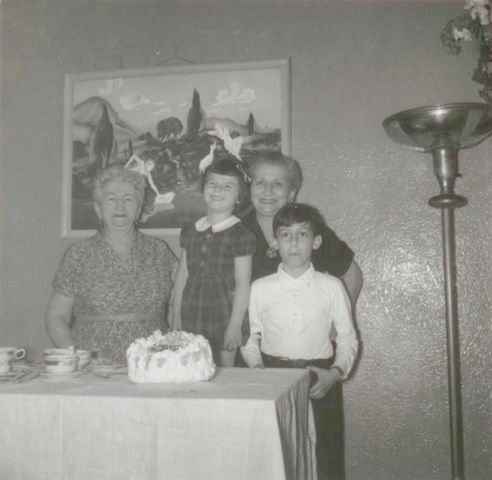
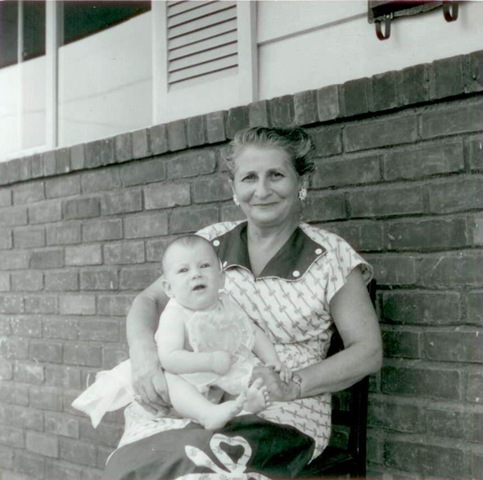 Other mothers are also with me. I am convinced that my mom’s mom, Grandma Bella, has her hands in the dough every time I bake her recipe for butter cookies. I have her Ateco cookie press and when I push the dough through to make the spritz shape, I think some of Bella is in the cookies, and that’s why they taste so good. I think about the way she and my brother watched wrestling together and even accompanied each other to matches. I remember her taking me on a Ferris wheel and swinging it, somewhat to my alarm, when we were at the top. I think about her openness to new experiences when we went on family trips to Sturbridge, the colonial
  village, or tried some exotic restaurant. I try to emulate her love for life and her interest in learning at any age.
I remember Aunt Edith and the way she sat with me, no matter how young I was, to ask about my life. Her interest and attention was so real and what, after all, could I have been sharing? That I liked reading but hated math? That I wished Raymond Keikisen would stop chasing me on the playground? Whatever it was, Edith’s attention was rapt, and I hope I have incorporated her listening skills into the way I sit with friends, family, and clients.
 Nina, my college suite-mate and kibbutz roommate, died of throat cancer when her daughter was just two. I met Tali twenty-one years later when she finished her stint in the Israeli army and traveled to the States. I was so pleased to tell her what I loved about Nina: her sense of humor; her complete devotion to her friends; her willingness to travel long distances to provide social work services to the neediest; her desire for McDonald’s cheeseburgers despite wanting to keep a kosher home;
  and above all, how being a mother made her happier than anything else. Nina is with me as a role model for keeping perspective and laughter in my life even when faced with dark days and cruelty in the world.
I have a ring from Grandma Gussie, my dad’s mother, and while it’s rather beaten up, I love that it was hers and that she gave it to me in a most generous gesture. I admired it the first time I saw it, and she immediately took it off  her finger and handed it to me. I love the fact that she always cooked us a meal when we visited, nurturing us with her food and showering us with her love. I relish the importance of family that she instilled in me and my cousins and suspect that her spirit was with us on our recent visit to the American Museum of Jewish History where we were reminded of her voyage to Ellis Island.
With apologies to St. John Chrysostom, I reflect:
She whom we love and lose,
Is no longer where she was before,
She is now wherever we are—on Mother’s Day,
And throughout the year and our lives.







 The Catskill Chronicle
Dear Janet….I read this post and was deeply touched. glad I suddenly found you here….I am also on FB : lots of love from ofra ben-shetrit
Shalom my dear old friend, Janet, I have no idea how I suddenly found this article about your mother. I read every word with so much passion and felt your deep love along the line of each sentence you wrote. I met your mother a few times and she was such a warm hearted kind woman. I did not have the chance to really get to know her better, but looking at YOU dear Janet, I always knew that your parents must have been very special as they did such a great job raising some one like you and Jude. I honor your mother and father too. I honor and love you and Jude and you are always in my heart………even after so many years, these old summer days in the Kibbutz will never be forgotten. we shared such joy, excitement, friendship and love. I hope you are happy. I hope you are well my friend. big hug to you and Jude.
Bless you always, Ofra ben-shetrit
We are so very lucky to have had such warm, caring, and good-humored women role models in our lives. Our mothers were not just sisters-in-law; they were friends as well, and they appreciated the good qualities each had. I can still remember Grandma Bella laughing loudly when she recounted going on a field trip with her seniors group and a gust of wind blew her hairpiece off as she boarded the bus. They all knew how to live, and how to laugh.