Review by Barry Plaxen
BETHEL, NY (May 12, 2012) – For the first of three concerts of a new classical music series in the Event Gallery at Bethel Woods Center for the Arts, the Delaware Valley Chamber Orchestra (DVCO) 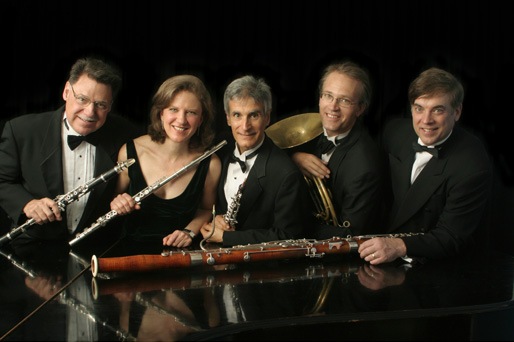 presented the Dorian Wind Quintet’s 50th anniversary program on April 20, 2012. Co-hosting a concert with the Narrowsburg-based DVCO is part of Bethel Woods’ commitment to strengthen its ties to and interact with the local community, a musical win-win situation for all.
The program began with – to me – a shock. I heard something I never heard before. Woodwind quintet arrangements by Mordechai Rechtman of two arias from Bach Cantatas, followed by Rechtman’s arrangement of a Bach Fugue. Well, we all have heard Bach Fugues performed on organ, piano and harpsichord, with string ensembles and lush Stowkowski-ish orchestral arrangements. But have you ever heard a Bach fugue like this – played by flute, oboe, clarinet, bassoon and French horn? These five instruments are not similar to each other as the violin, viola and cello are. They have totally different and identifiable sounds, as we know. And so each fugal line is heard in clear, distinctive voices, so much easier to discern than from one keyboard or a string quartet. This new way to experience a fugue was a thrill for me and, as similarly expressed, for others in attendance.
 A NY Premiere was 1980 Pulitzer Prize winner David Del Tredici’s (photo right) “Belgian Bliss” in which the world renown composer offered up a remarkable, and surprisingly very emotional, depicting of a two-person “relationship.” I say “surprisingly” because the music is full of wonderful, whacky humor. You might expect it to be just a fun piece, but introduced with Mendelsohn’s “Wedding March” from “A Midsummer Night’s Dream,” Del Tredici includes what might be called variations – though not really – that masterfully depict the bliss of true love and the inevitable arguments, rifts, ups and downs, backs and forths, ins and outs of a relationship, all skillfully expressed with a clever concoction of tonal and neo-romantic musical “notation.”
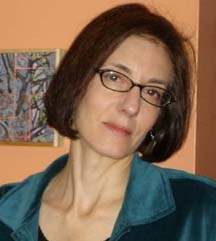 A World Premiere was “Natural Discourses,” a very interesting three-movement work by DVCO conductor Carolyn Steinberg (photo left), composed for and dedicated to the Dorian Quintet. The movements (“Invisible,” “Barely Visible” and “Clearly Visible”) have literary, poetic images and combine various tone colors, all seemingly “new” to me, with strong rhythmic pulses influenced by groove jazz. Steinberg offers tonal metaphors for each of the three poetic texts, her tonal “personal way of finding Nature in each musical instrument.” Perhaps the DVCO would be able to include “Natural Discourses” in its next concert for a much-deserved repeat hearing, even though it is composed for a quintet.
The grand finale of the evening was written for the Dorian Quintet’s 40th anniversary ten years ago. “Anniversary Variations on a Theme of (Anton) Reicha” is five movements of a melody given to five composers to inspire them to create a variation: our  beloved Lee Hoiby* (photo right), Bruce Adolphe (known locally to Weekend of Chamber Music audiences), Billy Childs, George Perle and Richard Rodney Bennett, who composed one “variation” each after reading the score for Reicha’s theme.
(*Oboist Gerald Reuter spoke about the composers who created this piece and gave a loving and emotional tribute to local resident Hoiby who passed in 2011.)
The five variations were all of different natures and individual character, as the composers all “read” something different from the score. For me Hoiby’s was the most successful as it seemed to be a full short work with a beginning, middle and end, rather than merely an expression or extension of Reicha’s theme.
Mention needs to be made of Reuter’s playing. Much like the first violin is the lead in a string quartet, the oboe is the dominant figure in a woodwind quintet. Much like the great violinists of many world class string quartets, Reuter is a superb artist in his own right and my next review of the April 21 Bronx Opera in South Fallsburg will re-mention Reuter’s outstanding talent – which encompasses his impeccable phrasing and his ability to communicate with and move an audience via his double-reeded piece of wood and metal. Because of his presence in the outstanding quintet, we were transported, rather than simply (and highly) entertained.
Next up for Bethel Woods’ series is the pianist Navah Perlman on June 9 at 7:30pm. Reservations are recommended. 1-800-745-3000.







 The Catskill Chronicle
Leave a comment