Photos: Ken Howard/Metropolitan Opera
LOCH SHELDRAKE, NY (October 23, 2011) – “Anna Bolena” (1830) was Gaetano Donizetti’s 35th opera, and catapulted him to superstardom. (He composed over 70 operas.) It was “livecast” at Sullivan County Community College in Loch Sheldrake on October 15, the first offering of the 2011-2012 Live from the Met in HD series. Objectively speaking, this Met season premiere was a resounding success. Audience members were enthralled during the four hours of singing of the highest quality.
Subjectively speaking, for this viewer, I felt as the audience did about the singing. But being enthralled by great singing is not the same as being enthralled by the “opera experience,” a necessary meshing of music and drama – or, I should say, drama and music. When the meshing works, it is far more than a great musical experience as the drama offers a wider expanse of emotional possibilities 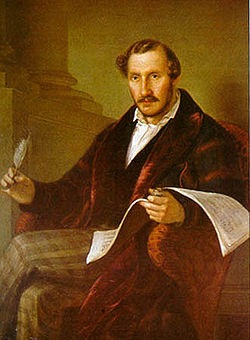 than just music. This came as a shock to me, as I have never gotten as involved in a Donizetti opera-seria as I did this time. Donizetti’s “good” score has no famous arias or passages, but is filled not only with “good” arias, duets, trios, quarters, scenas, etc., but dramatically and beautifully served my hero of the afternoon, Felice Romani.
Romani wrote the libretti for the most important Bel Canto operas of the 19th century. His libretto for “Anna Bolena” surpassed his others I have witnessed, with his understanding of the characters in Freudian terms, his (translated into English by an unlisted writer) clever, intelligent, expressive and sometimes poetic choice of words, phrases and sentences that were never short of dramatic impact and believability, offering Donizetti (photo left above) a wide range of possibilities for which to create dramatic music. And this time around, I believe most viewers knew the drama was of the highest quality and was arguably more involving than the music.
Director David McVicar did an outstanding job. Ann Boleyn, Henry VIII, Jane Seymour and the other characters are, in a way, clichés of historic characters that are “trapped” within the religious and social mores of their time and their royal positions. Romani gives us fully rounded 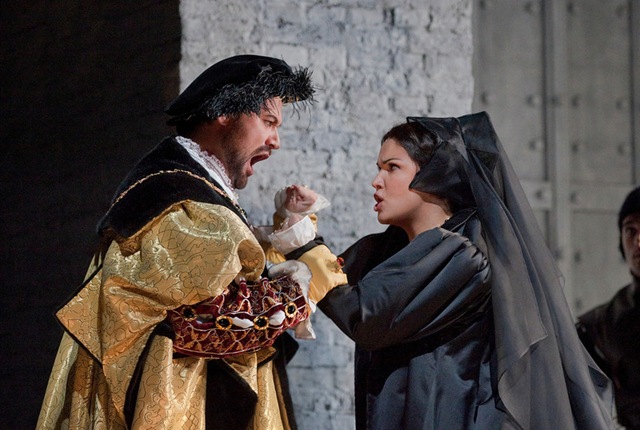 characters in deep conflict with whom we fully empathize, regardless of our own personal attitude towards outdated absolute monarchies. McVicar brings out all the psychological nuances of Romani’s words, even to the point of our somewhat feeling sorry for the self-blindness of the “evil,” neurotic, power-mad, unmerciful Henry VIII, brilliantly performed by bass Ildar Abdrazakov (at left in photo above).
Also giving a brilliant performance was tenor Stephen Costello (at left in photo below) as the love of Boleyn’s life, Lord Percy. The hero of the piece, so to speak, he is the only character 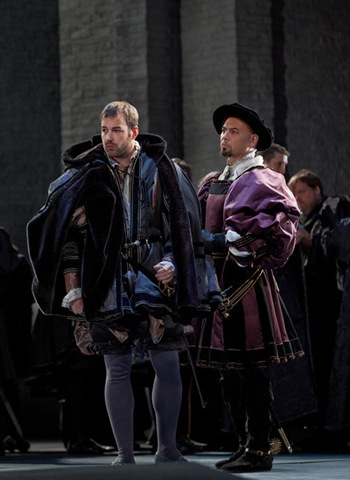 without guile, an aspect often not included in other operas with power-hungry, royal plotters, an aspect that adds depth to drama. Mezzo Tamara Mumford (photo at bottom of story), as a court page in love with Boleyn, has a beautiful voice with a velvety contralto quality. She was totally believable in her “pants” role. As Jane Seymour, Ekaterina Gubanova
 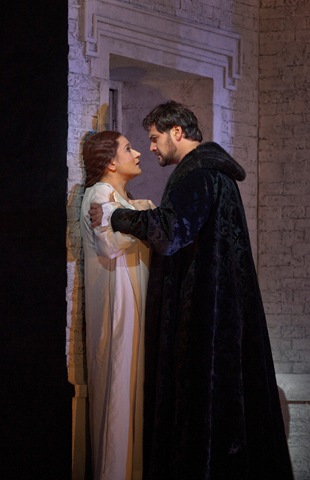 (at left in photo right) was outstanding in her musical and dramatic execution of the role, especially in her duet scene with Boleyn, but was, for me, miscast as she lacked the sex appeal needed for us to believe Henry would leave Boleyn for her.
And speaking of sex appeal, that brings us to the title character and soprano Anna Netrebko (photo below), whom conductor Marco Amiliato said in his intermission interview “has the Diva/Star DNA.” Unlike most people, I find Netrebko’s voice quality a bit “cold,” but not her 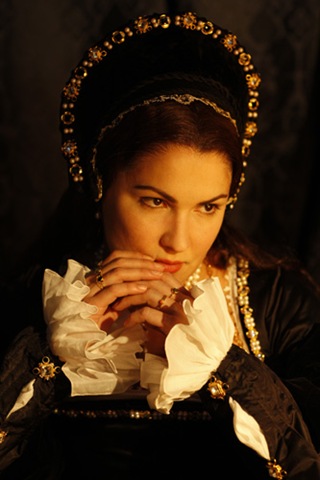 persona. Besides her impeccable and thoroughly skilled acting and her world-class vocal technique, she is a true star, communicating everything fully to her audience with great charisma. One knows all the time what is going on in her thoughts, and that is what great acting is all about. She brought many “intelligent” acting subtleties to her role, and exited the stage with a remarkable bit of well-motivated/character driven stage business, pulling her hair away from the nape of her neck with a gesture of pride and self-respect as she moved onward with courage and determination to meet her executioner. THAT is great theatre.
Once again, the Met stupidly and insultingly does not supply the names of the singers in comprimario roles. As Boleyn’s brother, Lord Rochefort, a singer/actor unlisted in the program was excellent.
Another interesting “character” was the female chorus which had a wonderful scene in the last act reflecting their feelings about Anna and her situation. 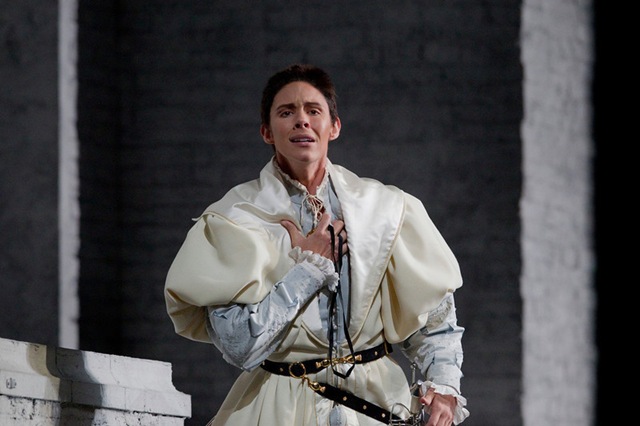 Again, director McVicar excelled by having each and everyone of them totally immersed in the situation and their feelings. As the camera panned the singers, each performer intensely maintained the feeling of the music and their part in the drama.
Robert Jones designed the heavy and lugubrious sets which perfectly reflected the heavy, lugubrious, unhappy, and painful lives of the protagonists. Conductor Amiliatio and the orchestra were, as usual, superb. Jenny Tiramani designed the authentic and colorful 16th century garb that somehow seemed part and parcel of the force of the drama.
Spending four hours totally immersed in a theatre piece, without ever losing involvement, is all too rare and, when it happens, is a great and joyful experience.
The next presentation in the series is Mozart’s “Don Giovanni” on October 29. Call 845-434-5750, ext. 4472 for a season flyer.







 The Catskill Chronicle
Thank you, Peggy. Yes, what a great treat for all of us to have the operas shown in that wonderful auditorium at SCCC. Opera lovers who don’t attend, are really missing out on great experiences.
Barry
Spot on, Barry! You mentioned all the things NY Times reviewer missed, esp. the depiction of Henry 8. I too thought it was nuanced, and NOT like a mini-series monarch from “The Tudors”. HD broadcasts are a great county resource. Thanks to SCCC for hosting them, and you and The Chronicle for covering them.