By Mary Hall
The New Orleans Zagat guide lists 78 pages of restaurants and even so, I, a mere visitor, have been to two that are too new or too arcane to make it into the guide. New Orleans is a city of a little over 300,000 people (pre-Katrina it was a little over 400,000) and ranks 59th in population for US cities, just above Pittsburgh. Yet it has a plethora of world class restaurants and is known far and wide as a foodie paradise. In the US, arguably no other city besides NY, LA and San Francisco has equal food star power, and those cities are much larger and with more diversified economies.
What makes this small city such a heavy weight on the food scene?
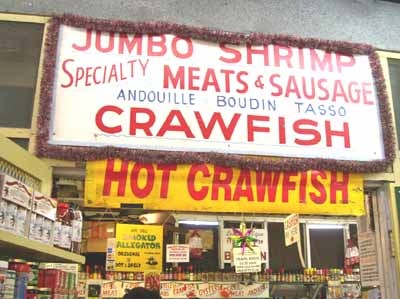 The first factor, I would say, is its determination to hold onto its culture. We all know that food is one of the defining aspects of culture and we all complain about the growing homogenization of what we eat. Not in New Orleans. Here folks are determined to hold onto each and every distinction in how a dish is prepared. If it is Cajun then it is made with a particular set of ingredients and priorities; if Creole, then another; if African American, another. And, these distinctions are discussed avidly. I went to a party recently at which we were served Crawfish Monica, a most elegant dish, rich and creamy and with quite a bit of heat. Everyone knew that this dish was served only at Jazz Fest and that the recipe was not available publicly, though it seems that our discerning hostess had found a source. Eyes rolled; chatter ensued; how had she managed? I’ll never tell.
Another reason is that this is a tourist town and there are many, many conventions here. This multitude of top notch restaurants survives because they attract untold numbers of orthopedic surgeons (this week’s convention, 39,000 of them roaming the streets), anime and manga publishers, petroleum geologists, and so forth, all of them on expense accounts and determined to have a good time after hours of boring speeches. Fortunately, they are supporting creative chefs and food professionals who seem, as far as I can tell, to be devoted to perpetuating and enlivening the intricate story of New Orleans cuisine.
My son A., the base player, was in town visiting recently. He has gotten to be a pretty intense foodie in the last few years, so we had a fine old time, both cooking in and eating out. Maybe the most famous restaurant in this city of  famous restaurants is Dooky Chase, run by maybe the most honored woman in New Orleans, Leah Chase. Andrew’s cousin, R, our “concierge,” arranged for us to have lunch there. She knows Leah, the 80 something doyen of African American and Creole cooking, and had worked with her after the storm. (Everyone refers to “the storm” and not to Katrina.) We ate fried chicken and greens and gumbo and it was lovely and then Leah, (be still my heart) came over to talk to us as, indeed, she did to all the tables. I knew that I was in the presence of an individual at once critically discerning and generous with herself, and as she cast her steely yet somehow melting gaze on me, I went all fluttery. Goodness gracious, I wanted her to like me, and I could not for anything think of something worthwhile saying. She chatted on asking us if we didn’t think that things were coming back, if A was not an extremely handsome cousin, if we realized how important R was to the recovery, if R was making sure to have a table at the Holy Thursday lunch, and we all fell more and more deeply in love. I guess that it happened to everyone in the restaurant. Afterwards we went to look at photographs of Leah with the presidents. They all have to come to Dooky Chase and get their picture taken with Leah when they are in town, and from their pictures is appears that they are in love too. Leah reportedly referred to Bush 43 as “the poor dear.”
You can’t spend any time in New Orleans without hearing about the distinctions between and origins of Cajan and Creole cooking. Here’s Donald Link, a well-known local restauranteur, talking about it:
The overly spiced and blackened food that gained popularity in the 1970s is nothing like the authentic Cajun food that I grew up with. … The flavors are focused and the food is highly seasoned, though not necessarily spicy. Examples include rice (steamed or dirty), roasted meats (served in their own fragrant juices), cured pork and sausage, oysters (fried or baked in dressings), pan-fried fish from local waters, wild game, turtles, crawfish, and lots of shrimp that might be grilled, boiled with spices, or simmered in on-pot meals like fricassees, gumbos, or rich buttery étouffées. By contrast, Creole cuisine is a melting pot of European influences and African and West Indian ingredients. It’s considered fancier restaurant food; you don’t see Cajun food on white tablecloths.
Well, Donald Link is a wonderful chef and his restaurants are great, but one of them certainly does have white tablecloths, and the Cajun people come from the French settlers in Canada who got booted out when the English took over in the mid 18th century, so they are European too. I’ve come to think that the distinction between Creole and Cajun is a little more blurred than the prolific discussion of the matter would lead us to believe, but, you know what, that makes it even more varied and fascinating than it would be otherwise.
A., my even-more-foodie-than-me, son and I take a ride over to Cajun country in search of the real, real thing. Did we think that New Orleans was not real enough for us?
It’s a two or three hour trip each way and we tell ourselves that it’s worth it. We have recommendations of destinations for places to get boudin (a Cajun sausage that’s mostly rice) and oysters from people with impeccable food credentials, and we are off. We drive through strip malls and country roads; we come to the tiny towns of which we’ve been told; we see some charming, old restaurants of some repute, but nothing is open in the mid-day of this beautiful Saturday. A. is calling out, “Mom, where’s the boudin? I’m hungry.” Nothing. Even the streets seem to be remarkably devoid of cars. Finally, feeling that we 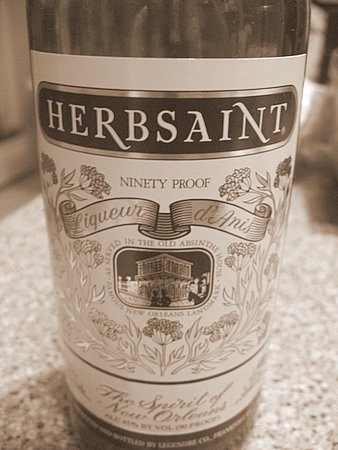 had worked very hard with very little to eat for it, we stop in a charming old town at a charming old restaurant, where, though it is after their closing time and they had just fed a bus load of tourists, they graciously make us each… a hamburger. Yes, a hamburger. Oh sadness… so many expectations, so few results.
Never mind… we drive back to New Orleans and get ourselves to Donald Link’s Herbsaint, where we have Duck Confit with Dirty Rice and Short Ribs with Hot Pepper Jelly. Was it Cajun? Who knows.
For the record, here are some things that we cooked at home:
Chicken and Andouille Gumbo (with local red and jasmine rice)
Shrimp and Corn Stew (with local red and jasmine rice)
Chicken and Dumplings
Greens with Tasso and Vinegar
Chocolate Bread Pudding with Bourbon Sauce
And here are some things not previously mentioned that we ate away from home:
Fried Rabbit Livers with Pepper Jelly
Pork Belly, Cucumber and Mint Sandwich
Red Neck Eggs, with fried green tomatoes and hollandaise sauce
Pig Face Sandwich, a BLT made with pork jowls
Shrimp and Grits
Millions of oysters








 The Catskill Chronicle
Just reading this makes me hungry!
Love those pork jowls!
Love to read about Ms. Mary’s culinary adventures!
I’m so jealous, everything sounds delicious.
an excellent piece, finely written. I almost feel like I was there.