Review by Barry Plaxen, photos provided
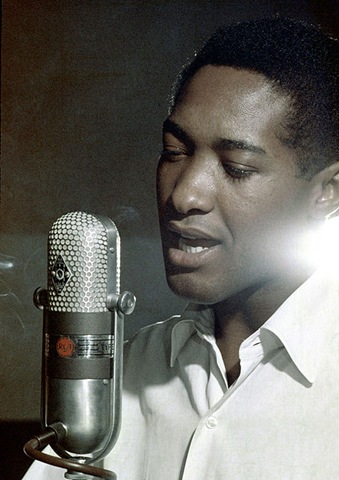 Passing the Torch Through the Arts, a non-profit organization that has as part of its mission “enlightening and enriching the lives of our children, thereby enriching our nation’s future, and finally mankind as a whole,” brought its production of “Sam Cooke: Where You Been Baby?” to Sullivan County Community College in Loch Sheldrake on Thursday, February 24, 2011.
This original musical play by Michael Monasterial illuminates the life of the legendary pop singer who wrote, performed and produced 24 Billboard hits over his eight years at the top of the charts.
Cooke was also a pioneer in the Civil Rights movement and an inventor of musical styles that are still incorporated in pop and gospel music 50 years later.
The musical play deals with his early years in Mississippi, his flight from small town living, his rise to fame, his career and marriage and his inability to master his life.
Throughout the play, Monasterial cleverly and astutely intersperses some of Cooke’s major hits that make appropriate comments on the scenes.
But the play’s the thing. And Monasterial’s dialogue made that so. Each scene had a beginning, middle and end. No extraneous words were there to distract from the momentum – the energy – he designed for the action to move toward the tragic ending.
One could easily see Cooke’s self-destructive personality being formed in the beginning of the play and understand the conflicts: familial, religious, social, ethnical, etc., that led to his untimely demise.
When Cooke, who was rarely at home with his family because of his desire to tour and perform, comes home to find that his son has died in a tragic accident, I realized this is not just about Cooke, but this is also the study of a human being. When a play can be viewed on multiple levels, it has greater value because it then reaches more people. In this case, fans of Cooke can watch his life unfold and hear his music. Others for whom he was not an icon, can see past that and witness the well-written dramatic telling of the downfall of a troubled everyman whose behavior conflicts with every value he was taught to believe when he was a child.
The symbol of success to Cooke was a swimming pool. As a child and young man he envied those “who lived on the hill” and lounged around their pool. Ironically, after his monumental success as an artist, and living in a large California home, Cooke’s son drowns in his swimming pool. Though this shocking irony made the tragic death emotionally very powerful on an additional level, Monasterial’s excellent writing and the direction and acting of this scene between Cooke and his wife made it a great theatrical moment for me that I will never forget.
“Sam Cooke: Where You Been Baby?” is a good example of a well-written play. Monasterial’s dialogue always moves the action forward, is exciting and interesting to watch and in the second half, extremely moving. Whoever his “ear” is, another person or himself, is to be congratulated.
This excellent melding of Cooke’s life and his songs was directed by Esther Taylor Evans, with music by Bruce Berky, saxophonist, who was seen live adding pathos to the performance with a tender execution of his melodies, and choreography by Abby Lappen.
 AnnChris Warren was Cooke’s wife, Vi. Mostly. As Vi, she added much to the joy of love and success at the outset, and pain and suffering that was to follow. When playing another character, she completely was that other character, in tone, body movement and aura.
Lucinda Carr was Cooke’s “Nanna” and the mentor of his morality. She provided him with “proper” values and was his main source of love and nurturing. Steve Jones and Dennis Washington played multiple parts: father, uncle, choir director, other locals, record company executives, etc. They were convincing in all their parts, often moving the audience to laughter or tears, and entertaining with their singing.
Playwright Monasterial (photo right) played Cooke and did himself and the production proud with his clean and precise writing, his soft, charismatic quality, his myriad of believable emotions, and his Cooke-style singing.
A true man of the theatre, Monasterial knows what he is doing.









 The Catskill Chronicle
Leave a comment