Story by Leni Santoro
PARKSVILLE – A blue plastic jug sits on the counter at the Fiddles Wally Mart located at the traffic light in Parksville. Taped to the container is a plea from a single mother whose child is suffering from SMA, it reads –
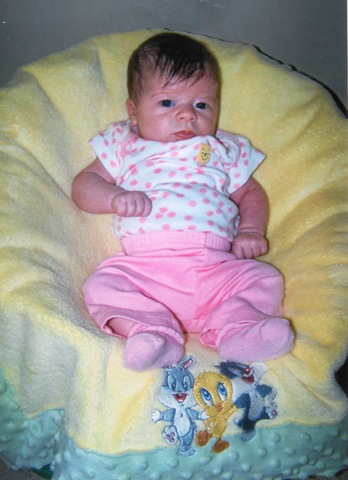
“Gabriella Rose is a 5-month old local child diagnosed with Spinal Muscular Atrophy (SMA), a terminal disease.
Her single mom is in need of special medical equipment not covered by her insurance. She also needs to go to Westchester Medical Center three times a week. Please help defer the costs.”
According to the research and support group, “Families of SMA” located in Santa Clara, CA, “Spinal muscular atrophy (SMA), is the number one genetic killer of children under the age of two, it is an often fatal disease that destroys the nerves controlling voluntary muscle movement, which affects crawling, walking, head and neck control, and even swallowing.
WHO IS AFFECTED
SMA is one of the most prevalent genetic disorders.
- One in every 6,000 babies is born with SMA.
- SMA can strike anyone of any age, race or gender.
- One in every 40 people carries the gene that causes SMA. The child of two carriers has a one in four chance of developing SMA.
- 7.5 million Americans are carriers.
THE TYPES OF SMA
SMA Patients are classified into four types based on milestones achieved at onset of SMA. Type I and II are the most prevalent.
- Type I, or Werdnig-Hoffmann Disease, is the most severe form of SMA. Type I SMA strikes infants between birth and six months old. Children affected with Type I cannot sit without support.
- Type II affects infants between seven and 18 months old. Type II patients may be able to sit unaided or even stand with support. They are at increased risk for complications from respiratory infections.
- Type III, also known as Kugelberg-Welander Disease, is the least deadly form of childhood-onset SMA. It strikes children as early as the age of 18 months, but can surface as late as adolescence. Type III patients are able to walk, but weakness is prevalent. Most patients eventually need to use a wheelchair.
- Type IV is the adult form of the disease. Symptoms tend to begin after age 35.
SMA does not affect sensation and intellectual activity in patients. It commonly is observed that patients with SMA are unusually bright and sociable.”
People interested in helping Gabriella and her mom may stop by Fiddle’s Wally Mart in Parksville to place their monetary donations in the little blue plastic jug or send their contributions to: Gabriella Rose c/o Christina Altman, PO Box 98, Woodbourne, NY 12788.










 The Catskill Chronicle
Very touching Leni, thank you for sharing with our community. I’ll try to spread the word..